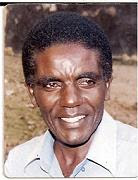
Marende’s Challenge More Than Kreigler’s Spin.
By Maina Hatchison.
The person and Office of the Speaker of the Kenya National Assembly, Honourable Kenneth Marende, has propelled debate on aviation safety well beyond the writ of the Kenya Civil Aviation Authority’s (KCAA) ambit. It is instructive that his words, concerns and commission from the Chair and elsewhere were not only reflective but attuned to investigation of local aviation both as a mode of (un)safe transport and a vilified industry.
AT THE HEIGHT OF EMOTIONAL lows following the late ‘Kones – Laboso’ aircraft tragedy, Honourable Harun Mwau – Assistant minister, Transport and MP, Kilome – rose in parliament to plead for patience toward awaiting for a procedural post-fatal accident investigation to adduce the chronology of failed aerodynamics particular to that flight. Members of Parliament were apprehensive about a trend all too visible within the preceding decade. However, Mwau knew that the permutations of a single airplane incident or accident are legion.
That Honourable Clement Wambugu, MP Mathioya, was named to the overseer group of panelists was a pointer to the Speaker’s insistence on the professional rethink on our aviation safety and administrative philosophy. Clement is not only a former airline pilot but a former Air Traffic Controller. Both he and Mwau – a pilot in his own right - know the challenges of both sides of the KCAA and Kenya Aerodromes Authority’s (KAA) omissions and their toll on former pilots etched in accident epitaphs since aviation came to Kenya in 1915.
Kenya’s first person to die of an airplane accident was Maia Carberry on March 12, 1928.
This lady of wings was such a polished pilot that at the material time she was giving flight instructions to a student who perished with her. Shocked settlers and gossip pundits of the Happy Valley set believed she could only have been sabotaged. Short of that they were prepared to credit her eulogy within a suicide farewell.
Needless to remind Kenyan politicians, the first accident involving a Boeing Jumbo B747 happened at Nairobi ’s Jomo Kenyatta (Embakasi – HKNA) airport on November 20, 1974. The Nairobi accident - in which 59 people died - crashed shortly after takeoff. Pilots were blamed outright for inactivated slats and the hydraulics that go along with it.
Not all accident investigations can be expected to touch base with such conclusive realism. Mwau knows that helicopters can crash when the main rotor vortex (down-wash) is deflected by freak winds to the tail rotor. No one would be the wiser if and when a CFIT – controlled flight into terrain – is entered to the disrepute of the pilot.
Likewise Clement knows that in marginal weather while flying in the neighborhood of Cumulus -Nimbus clouds, a pilot – even when aware of local terrain spot heights – may be forced to hug the lowest ‘safe’ altitudes. A singular down-draft (wind shear) might slam the airplane to the ground. Again, no verdict other than ‘controlled-flight-into-terrain’ (CFIT) would suffice there being no evidence of the dissipated CB cloud. A pilot is three times safer flying in the Grand Canyon than entering into an argument with CB clouds. The question begs, why, then, can’t pilots just land at the nearest aerodrome and wait for the weather to improve?
Indeed air law requires a pilot caught up in poor weather to land at the nearest ‘safe’ aerodrome. But do parliamentarians ever take the initiative to force inspection and fund mandatory aerodrome repairs given that they are the ones which enact the Kenya Civil Aviaiton Act in the first place? Isn’t it inimical to cry wolf when one, or two, or a dozen of their own end up victims of omissions fashioned by their ignorance of the aviation tedium?
Kenyatta’s Power and Communications Minister Dr. Omolo Okelo was a pilot. He knew the stakes. He knew that to survive in the air ‘one has to learn how to cheat death on the ground’.
The Honourable Speaker’s initiative should therefore not be left to fizzle with release of the late ‘Kones – Laboso’s report’. The two were victims of our collective neglect. If parliament can concede apprehension from a trend of airplane crashes that threatens frequent fliers in our airspace, why not go the extra mile and constitute a permanent parliamentary aviation commission to outline a continuous vigilance?
Picture this.
In January 1913, a motion was brought before the American Congress imploring the government to form an aviation research body. It was, as expected, defeated because air travel would have threatened the interests of those who had won lucrative long term government and corporate contracts to haul staff, cargo and mail on the courier road, rail and horse trails.
In 1914, World War 1 broke out. Again American aeronautical apologists pointed out how vulnerable America was to attacks from the air. American politicians responded that ‘a European war need not be an American problem’: America had ‘no colonies to defend’ and the Atlantic was ‘buffer’ enough.
The Navy thought otherwise; it was vulnerable at sea!
Navy Assistant Secretary F.D. Roosevelt successfully sneaked back the defeated motion albeit as a military contingency. On March 3, 1915 - under President Woodrow Wilson - an Act of Congress established the National Committee on Aeronautics, NACA.
For the next 43 years, the NACA relentlessly pursued aviation with vigor, patriotism and scientific purpose. It didn’t take long for Americans to dominate not only aircraft manufacturing but air transport and avionics industries.
On Oct 1, 1958, the NACA was disbanded and replaced by NASA, the National Aeronautical and Space Agency. And believe it or not, the NASA story can be articulated on the ‘floor’ better by the Emuhaya MP, Dr. Wilbur Otichilo who believes that ‘by now Kenyans should be launching their own communications satellites.
Were the trio of Harun, Clement and Otichilo given the mandate to jump start our aviation and space pretensions within the 2030 mantra, then the perennial activist and opportunistic opposition fronted by the Namwamba and Martha numbers would no longer bog the nascent industrialization pace of the august House. We must commit ‘this’ parliament to discussing aesthetic and industrial advance. Certainly, it won’t take time before Mwau and Clement build ‘community aerodromes’ in their constituencies. Likewise, if there is a legacy that the people of Emuhaya can grant this country, then it is to prop up the challenge by their two most eminent Sons to give us a new aviation safety formula.
The establishment of a permanent parliamentary commission on aviation is one such.
Mr. Speaker Sir, I beg to move.
END
The writer is a former Air Traffic ControllerKenya DCA (1979 – 87)
now a freelance aviation writer.
Sunday, March 29, 2009

Saturday, March 28, 2009
KENYAN APOLLO 11 TWIST
NO.001
THE EAGLE HAS LANDED.
Various claims have been made that the Apollo II moon landing was stage managed or faked. The skeptics are no more than opportunists who capitalized on anti government (GOP) syndrome or sentiment to mint money from illiterate anti-science audience especially Christian fundamentalists.
See the following pages for scientific explanations of the disputed facts.
http://pirlwww.lpl.arizona.edu/~jscotti/NOT_faked/ APOLLO HOAX DEFENCE
***********************************************************
NO. 002
KENYA'S OWN APOLLO 11 TWIST.
Kenya has its fair share of strange history. The landing of Neil Armstrong and Buzz Aldrin on the moon July 1969 coincided with the slaying of Kenya's best known Kennedyte, T.J.Mboya.
Buzz, Neil and Collins were all born same year 1930, a few months before Mboya. As they ascended to the 'heavens', T.J was 'descended' to the grave.
***********************************************************
See http://history.nasa.gov/ap11ann/astrobios.htm for Neil, Buzz and Aldrin's biographies. Alternatively, go directly to Nasa homepage.
http://www.nasa.gov/home/index.htm for Apollo 11 story from Nasa website. In the search area, enter 'Apollo 11'.
***********************************************************
No symmetry here you might think. But those who were old enough to suffer the political fall-out each have a story to tell.
Don't ask me: I was only 10 years old then. Better ask the born again revival Christians a.k.a 'Balokole'(i.e. the redeemed ones) or take my juvenile recall here below.
[Check/artistic license.] ============================================================
THE APOLLO 11 - T.J POLITICAL FALLOUT.
By Maina Hatchison
___________________________________________________________
One week to rocket launch, Kenyan cabinet Minister Thomas Joseph Mboya was assassinated in broad daylight on a Nairobi street. Some claim the killer was apprehended on the spot, others believe he was caught later. What followed thereafter was a virtual nightmare for Kenyan born again Christians.
I'll tell it my own way.
I have often heard tales of Kennedytes having been consumed by their own logistical Frankensteins. This talk revolves around political assassinations of the dark Sixties. Headlines and newswires were every other month inked in blood of slain activists be they political capitalists or social pacifist crusaders. There was death in America, slaying in Ireland, killing in South Africa, genocide in Vietnam not to forget the Soviet death mills of Siberia.
Newly independent African states were easily swept up in this game. Not only was it crossfire from the cold war, more likely post imperial turf wars being fought out by European colonists to tame emerging American liberalisms.
No doubt those who were assassinated were victims of covert boardroom adjustments. Others - and this is where the Kennedyte theory thrives - are said to have fallen to Uncle Sam's internal adjustment hiccups switching from the Democratic (Kennedy) era to the grand old party's Nixonian entry.
The story goes - albeit a very tall one - that known Kennedyte cronies, both in America and globally, had to be neutralized, or, silently silenced.
However, there is a claim that this culture of silent liquidation was just a continuation of a covert network perfected by Kennedy himself. It is this network that is suspected to have outgrown it’s detail to consume not only the itemised enemies of the Democratic regime, but the very architects of it's creation. Hence the Frankenstein quip.
Nobody can know for sure whether these were the motives behind the Sixties bloodbaths. What is not in dispute is that a tidy score of African Kennedytes were dealt and aced to their fate. One such was Kenya's cabinet Minister Thomas Joseph Mboya.
T.J. - as he was popularly known- was a pole positioned pro- Kennedy pretender to the high stakes of Kenyan politics. At only 39 years of age, the dashing prodigy was easily stalked down the streets of Kenya's capital Nairobi, in and out of a main-street pharmacy, and, in broad daylight, shot and critically wounded July ,1969.
He died on the spot or, on 'his way to hospital'.
Political assassins are commission artists. When a job is done, it no longer matters whether it is a clean strangle or a sprawled messy corpse. The essential part is that a target has been disposed.
Those killed are obliged to make two contributions. They ought to find it easy to make great international headlines helping spread the finality of their demise beyond speculative rumor. Second, victims are obliged to stay permanently killed.
Killers on their part make no apologies or regrets. However, they should be crafty enough to create mysteries as to whether they acted alone or were recruited by third parties. T.J's killer - a tribesman of the President's central Kenya stable - was even said to have smiled off cross-examination and final conviction to hang.
To enlightened citizens, whether the killer was hanged or not made little difference. The fact remained that Mboya had been permanently deleted from Kenya's political scene. (Today's generation might say there is no recycle bin to political assassination). T.J simply ceased to exit. He had made his date with destiny.
Citizens, as political animals, could not be expected to have swallowed hook, line and sinker such sleight of hand hoodwink. There had to be fallout; an outcry of foul play.
Hundreds upon thousands stood up to mourn Mboya. The westside quarter of Kenya's Luo enclaves went abuzz with agitation for settling scores in lieu of their fallen hero. For President Kenyatta's 6 year young government, reality was turned upside down. Talk of Cain and Abel started doing the rounds.
At only 10 years of age - a primary five grader - I couldn't claim to have mourned the minister. I didn't even know who he was. I was the typical native molded on a plastic bag of European myth, fable and legend; Horatio, Alexander-the-Great, the brave 'seven at one blow' tailor, the Spartan boy and the fox, not forgetting the biblical narratives.
It would only have been a black day for me if our noon-time heroes - Olympian athlete Kipchoge or East African safari rally driver Joginder Singh - had as much as been reported glazed in a freak accident. These were the village heroes who captured our imagination. In any case, our curiosity was held to a new kind of appeal. Our teachers were always reminding us that Americans were going to the moon.
At least I couldn't doubt this because that is what our big hi-fi Grundig radio kept talking about. News briefs had become all too predictable. Local clips were typically cantered with presidential briefs; party disclaimers, Mboya updates; then Dar-es-salam, Lagos, Pretoria with Cairo rounding off the African slot. International clips would quote London, Moscow, New York, then Saigon and, of course, Washington: Apollo 11.
Apollo 11 was launched July 16, 1969. World attention would henceforth be riveted skyward. Mother would even call us late evenings to listen to crackling 'live' feeds of astronauts talking from space. As the trio of Buzz, Neil and Collins floated in zero G, we were too young to grasp the gravity of their scientific achievements. If the killers had phased this euphoric trance as an opportune window to fade out T.J backlash, they were mistaken. In fact it helped fuel it.
In our particular village a lorry appeared. It started picking up men and women taking them to undisclosed destinations. Those who wished to go along rode the lorry by day; those that dithered were given a discreet option to ride by night.
The difference was the same. To be counted as 'having gone' was the end in itself. And lest tribesmen mistake what lorry was taking people where, a bright white sign was painted aft-top the driver's windscreen against a black background. It read; APOLLO 11!
Anyone could thus climb up the back of the lorry without uttering a single word to those one found there but with the knowledge that Apollo 11 would take you wherever it was that tribesmen were being taken.
The tempo later turned nasty. People started being jacked out of their houses at night. Men and women were walked to neighborhood rendezvous with local stand-in moguls.
We, the children, were spared the hustle but our fear grew that should our parents be targeted we might perish with them. As good Christians, we were supposed to die gallantly more so like those who had braved the Nero purge - if not buoyed by Spartan courage - whichever was the greater. I was not so sure about that. Neither were the other kids. Hence every other day almost every child had a story to tell. I had none; I simply listened.
One thing baffled us though; whereto were people being taken?
Some children said their Aunts claimed they had been 'taken' to drink 'tea'. Uncles punctuated it better saying 'they had gone' to collect 'tea leaves'. Yet others claimed there was a massive land demarcation program where every tribesman and loyal tribeswoman was to get a free title deed provided it was collected individually.
But we had to contend with that village lorry and it's rowdy choir. Theirs was a different song of improvised lyrics. With fists banging on the lorry's woodworks, they proclaimed in loud voices;
We have gone to the moon,
Have you gone to the moon,
Come brother, Come sister,
Apollo 11 will take you to the moon,
And bring you safely back home.
That last line would have made Kennedy proud. But he, like T.J, had bit the dust long before Eagle's engines started burning.
We began to see the lorry in new light. We learnt to dive under road culverts whenever we heard any engine that snarled like the dreaded 'Thames Trader' truck.
Then our english teacher, a lanky man in his late twenties, took us a step closer to defining the mystery of the moon rakers.
'Anyone ever heard of the Khu Klax Klan?', he asked one late morning after the class had watched Apollo 11 rabble itself up a distant ridge.
Primary school buffs are amazing lads. Not only did someone know about the Klan but chose to digress about Martin Luther King Jnr . King had been killed a year earlier February of '68.
'People who don't like other people start civil wars'. He said to no one in particular but with a tinge of contempt.
He'd said this looking out the window in the direction of Apollo 11. Most of us wrote down 'civilwar'. It was a new english word or words or double-word.
'Civil wars kill people needlessly' he added. There was a sad tone to his voice. I jotted down 'needlessly'. I would sure use it later in a composition.
He then asked us to write down the longest english word we knew. The bright fellows wrote 'Mediterranean' while I thought of 'Mississippian'.
He shook his head, picked up his chalk and wrote on the board in block capitals; ANTIDISESTABLISHMENTALIANISM! He read it out loud, flawlessly.
We clapped and applauded. By the time we were through with our attempts to pronounce it, he had picked up his books, duster and chalks and hurriedly left for the staff room.
I looked at my notes; Elizabeth Fremont, Khu Klux Klan, civilwar?, needlessly and antidisestablishmentarianism. He had even demanded that we learn to pronounce 'Fremont' with a french accent; 'fghe-moh..'.
I understand it was British Prime Minister William Gladstone who coined the 28 letter word. What he meant I know not. I don't even know who the Queen's prime minister was at the time Mboya got killed. But newspapers were now filing stories that made Britain's former colony look as if it was headed for a post-independence Belgian Congo encore. Some legislators thought this a national fiasco and raised the question in parliament; was the government abetting a crisis that could send the country into civil war?
Africans, that is, black Africans, for all their brotherhood, rhetoric and Diaspora solidarity, have a very low integrative quotient. Tribe, ritual and custom are what define value in many of our communities.
A 'born-to-rule' complex pervades most tribal-centric politicians who define independence within a herrenvolkist subordination of other communities: that to 'rule' and 'wisdom' can only be inherent within their tribe's values.
This could be said to be the original sin of African ruler clans, tribes and, without exception, of Kenya's central Bantu tribes. Parliament knew this. It decried the clandestine nature of these underground campaigns. Government denied these claims. But on the ground, 'tea drinking' and 'moon journeying' continued unabated.
Someone had to act, and did.
Kenya's chapter of East Africa's famed revival believers - otherwise called by their Ugandan acronym 'Balokole'- protested. These born-again evangelicals (near puritan) who preached redemption and public confession, boldly described the underground heist as not only unchristian but clandestinely evil.
Balokole insisted that a young country like Kenya could not afford to go back to the days of 'night' diplomacy. They were people of the light not darkness. They were always called upon to walk in heavenly light not chase shadows of earthly ethno chauvinism.
Rumors started circulating that prominent clergy had 'gone' to get their 'title deeds'. Slander even claimed that top balokole on the convention circuit had gone to the 'moon' and were safely back preaching salvation without intimidation.
This brought balokole into direct conflict with the ethnic merchants. Considering that a top Anglican cleric had been so visible as translator in Billy Graham's early 60's crusade in Kisumu, Kenya, the very tenet of administrator commitment to the revival spirit was being challenged.
Then newspapers reported that a prominent proponent of the evangelicals had been fatally assaulted for refusing to accompany the night monguls. His wife was critically wounded but survived to testify.
Her photograph was carried in the local dailies. Mother said we ought to know her since she was a regular visitor to one of our Aunties. I remember looking at the picture but couldn't recognise her. But again, how do you identify a face mourning a killed husband?
Balokole deaths can never be anonymous. Death is either celebrated as 'passing to glory' or condemned as damnation for those who have died without committing their lives to Christ. Matters religious and matters redemption were not synonymous.
Worse, the assailed couple hailed from the president's district. If brother could kill brother and the president's men stay aloof, (sandwiched between a distant truth that the president had a family affiliation to the Roman Catholic Church) and that the slain believer was a mainstream protestant, theorems of betrayal became most appropriate within an Irish internecine frame.
Villagers even floated that charge that if the Anglican head of the central Kenya diocese did not speak to condemn the slaying of a Presbyterian brother, then it could only imply that he had 'Nicodemusly' gone to the moon.
Others defended him stating that since he was related to the president by marriage, he could not be expected to stoop so low as to partake so petty a pledge of loyalty to a in-law kinsman.
The church however needed to talk with one voice to ally fear and slander. Since balokole operated within the protestant mainstream - unlike their pentecostal and independent secessionists - something had to give lest a new Irish twist develope to overshadow the real issue.
But what was the real issue?
The real issue was that with T.J's killing, sectionalist animosity between western and central Kenya tribes threatened civil war. This had become the moonrakers item; should war break out, every loyal central Kenya tribesperson would be called upon to selflessly defend the land against aggression.
It was this loyalty that every 'tea' partaker had to define by pledge at the risk of being counted a traitor. That reference to 'land' was also a cryptic call to protecting of perceived 'right to rule' of the land called 'Kenya' not necessarily enclave interests.
However, land politics or its defense was not Balokole priorities. They had a clear line defining secular obligation and matters heavenly. Born-agains had no room for security in worldly returns. They coined enough vernacular translations of the western classic 'This world is not my home' as popularized by the late Jim Reeves who had died three years earlier in an airplane crash.
There was no room for tea in balokole anthems. Indeed, the East African revival movement is said to have originated in Rwanda, strengthened eastward through Uganda before taking firm hold in Kenya's and Tanzania's Anglican, Presbyterian and Methodist protestant communities.
By 1957, the protestant churches had witnessed so much killing worst of all the 1948 Rwanda-Urundi bloodbath between Hutu and Tutsi tribes.
Kenya had also just gone through an independence war where British soldiers decimated over 13,000 Africans with 37 whites butchered in cold blood.
Hence the balokole decried any move that would send East Africa back memory lane to more hatred, mistrust and political mischief. Singing their powerful Luganda adaptation 'Tukutenderesa' (we praise you Lord) - off the song ‘Glory to the Lamb' - they left no doubt where their loyalties lay. (They sing it, in Luganda, to this present day, 2004.)
'Oh the precious blood has washed me,
Glory glory to the Lamb.'
They went around preaching deliverance though operating within ambit of their mainstream mother churches. They did not dwell on the conflicts so common among born-again puritans or pentecostals nor decry church catechisms, doctrines, nor invoke wasteful doctrinal arguments as to the role of nominal affiliation of proselytes.
Every soul on the pew was deemed a soul to be claimed to the fold. Redemption was for each and every that so willed through forgiveness. Debates over use of church administrative symbolisms were not prime to this message of redemption.
Rather, they opted to use every open avenue to proclaim Christ the redeemer while involving themselves with the humanitarian commission of social appraisal of their localities especially school building projects. They used every opportunity given them by the administrative pulpit, home vigils and open air crusades to proclaim Christ.
Their hallmark signature became the Sunday afternoon - and mid-week Wednesday - exclusive born again meetings where they met to appraise each others' burdens through sharing of testimonies, public confessions, fellowship, sharing the 'light' and prayers. Thus they came to be known variously as the Balokole, Tukutenderesa or 'People of Burdens'.
The death of their Presbyterian brethren was one such burden. It sent their resolve to new heights.
Administrative and revival bind; nominal and committed faithful interests merged in a need to extricate the church - especially the protestant mainstream - from rumors of having been compromised by the evil hand. Unholy schemes had to be condemned and exorcised publicly by unanimous ecumenical and catholic affront. A christian rally was called.
Church history records that this meeting was held at the Anglican St. James-and-all-Martyrs cathedral situated in the sleepy town of Fort Hall - now Murang'a - 100 kilometers north of Nairobi.
This was in itself a political statement in that this was the ancestral home of the great Kikuyu tribe from whence the epicenter of oathing had spread. Over 30,000 believers attended, a crowd not even the president could command in his rare off-beat visits to the district.
What at first looked like a random revival convention or out-air meeting sent shock-waves round the country. Not only did the mainstream clergy deny all claims of compromise, they fearlessly condemned any system that could 'substitute faith in God for security in man'.
There were bitter testimonies of intimidation of believers. Brethren exchanged hushed testimonies of personal experiences. No doubt consensus had to prevail that christians have but one enemy; the evil one.
This accuser, the devil, was not short of agents. The christian part was to pray such be convicted unto repentance and forgiveness, and, eternal life.
"Stand firm rooted in the faith of your calling; suffer trials and contempt from worldly rebuff but in all things give thanks to God and claim your victory. Why. count it joy when you fall into diverse temptations....."
Tukutenderesa.....
'These are our people invoking conflict; Brothers, Sisters, these are our children at risk; our church, our fellowship, our nation. Was that what Christ pledged to us on the cross?'
John 14:27.
'My peace I give unto you'; and wasn't he called the prince of peace? We have thus but one pledge to make in return. We must heed his voice calling this land to healing and repentance.
'No more shall it be said of this land that man has substituted himself for God demanding burnt offering by day and killing brethren at night. In the name of Jesus of Nazareth we rebuke the evil that seeks to destroy our tranquil land. God be our witness here today that we proclaim victory in Christ Jesus; there is no more King , or slave; Jew or Gentile. We are all one; in Christ Jesus'.
Tukutendereza...
My mother attended the meeting. She came back home to witness to those who had not made the trip. It was now clear that the movers and shakers of the political center had no choice but to concede their project vain and untenable. Going against a vocal and defiant church was no longer a political option.
Local radio started giving more prominence to the far abroad items from the ever volatile Saigon - Washington quagmire. It must be at this time that the names Henry Kissinger and Gromyko gained prominence.
Moon talk fizzled.
And so 'Apollo 11' disappeared for a new coat of paint. Young as I was, I knew that the storm had passed. But I could not lie to my self; the fear had been real.
And with it's passing , I had to rediscover my former soul of introvert solitude. In everyone's word of honour, consensus had decreed that bygones be bygones; in Jesus' name.
I went back to my East African Safari rally fair.
Traditionally, Kenya's easter weekend is - was - rally time. The FIA calendar had put paid to sentimental local timing. Joginder Singh let me down. One Edgar Hermann navigated by Hans Schuller made it two in a row before Hannu Mikola and Gunna Palm made history in 1972 giving overseas drivers a first win in a Ford Escort RS. No more TJ headlines. In it's place were bold headlines heralding a rhetorical question; 'What will the Ford men say?'
I don't know what they told the world. All I recall is that somehow nobody was telling anyone anything meaningful. Village life amazingly went back on cue to the rhythms of God's wonderful sunset and sunrise.
Night times, I would still look up the sky and remember the real Apollo sojourns. Sadly, on 7th December 1972, Americans sent up Apollo 17 and proclaimed to the world there'd be no Apollo 18. Astronauts Eugene Cernan, Ronald Evans and Harrison Schmitt returned safely to an epoch ender splash-down 19th December 1972.
That same year I sat my seventh grade, passed to gain that most coveted high school status where I later joined the astronomy club.
And likewise it came to pass that three years on from the day TJ's fatal bullet was fired, the field simply went mute!
........................END....................
P.S 1: There is a famous girls school from the Mount Kenya region which has the Apollo 11 painted on its port lower front in bold text aka AL 27 3U.
P.S 2: There are some caves excavations in Namibia which were discouvered around the same time Apollo 11 landed on the moon. They were aptly named for that particular ’lunatic’ feat. The paintings found therein were brought in from somewhere else but are said to have been etched around 25,000BC - 23,000BC.
THE EAGLE HAS LANDED.
Various claims have been made that the Apollo II moon landing was stage managed or faked. The skeptics are no more than opportunists who capitalized on anti government (GOP) syndrome or sentiment to mint money from illiterate anti-science audience especially Christian fundamentalists.
See the following pages for scientific explanations of the disputed facts.
http://pirlwww.lpl.arizona.edu/~jscotti/NOT_faked/ APOLLO HOAX DEFENCE
***********************************************************
NO. 002
KENYA'S OWN APOLLO 11 TWIST.
Kenya has its fair share of strange history. The landing of Neil Armstrong and Buzz Aldrin on the moon July 1969 coincided with the slaying of Kenya's best known Kennedyte, T.J.Mboya.
Buzz, Neil and Collins were all born same year 1930, a few months before Mboya. As they ascended to the 'heavens', T.J was 'descended' to the grave.
***********************************************************
See http://history.nasa.gov/ap11ann/astrobios.htm for Neil, Buzz and Aldrin's biographies. Alternatively, go directly to Nasa homepage.
http://www.nasa.gov/home/index.htm for Apollo 11 story from Nasa website. In the search area, enter 'Apollo 11'.
***********************************************************
No symmetry here you might think. But those who were old enough to suffer the political fall-out each have a story to tell.
Don't ask me: I was only 10 years old then. Better ask the born again revival Christians a.k.a 'Balokole'(i.e. the redeemed ones) or take my juvenile recall here below.
[Check/artistic license.] ============================================================
THE APOLLO 11 - T.J POLITICAL FALLOUT.
By Maina Hatchison
___________________________________________________________
One week to rocket launch, Kenyan cabinet Minister Thomas Joseph Mboya was assassinated in broad daylight on a Nairobi street. Some claim the killer was apprehended on the spot, others believe he was caught later. What followed thereafter was a virtual nightmare for Kenyan born again Christians.
I'll tell it my own way.
I have often heard tales of Kennedytes having been consumed by their own logistical Frankensteins. This talk revolves around political assassinations of the dark Sixties. Headlines and newswires were every other month inked in blood of slain activists be they political capitalists or social pacifist crusaders. There was death in America, slaying in Ireland, killing in South Africa, genocide in Vietnam not to forget the Soviet death mills of Siberia.
Newly independent African states were easily swept up in this game. Not only was it crossfire from the cold war, more likely post imperial turf wars being fought out by European colonists to tame emerging American liberalisms.
No doubt those who were assassinated were victims of covert boardroom adjustments. Others - and this is where the Kennedyte theory thrives - are said to have fallen to Uncle Sam's internal adjustment hiccups switching from the Democratic (Kennedy) era to the grand old party's Nixonian entry.
The story goes - albeit a very tall one - that known Kennedyte cronies, both in America and globally, had to be neutralized, or, silently silenced.
However, there is a claim that this culture of silent liquidation was just a continuation of a covert network perfected by Kennedy himself. It is this network that is suspected to have outgrown it’s detail to consume not only the itemised enemies of the Democratic regime, but the very architects of it's creation. Hence the Frankenstein quip.
Nobody can know for sure whether these were the motives behind the Sixties bloodbaths. What is not in dispute is that a tidy score of African Kennedytes were dealt and aced to their fate. One such was Kenya's cabinet Minister Thomas Joseph Mboya.
T.J. - as he was popularly known- was a pole positioned pro- Kennedy pretender to the high stakes of Kenyan politics. At only 39 years of age, the dashing prodigy was easily stalked down the streets of Kenya's capital Nairobi, in and out of a main-street pharmacy, and, in broad daylight, shot and critically wounded July ,1969.
He died on the spot or, on 'his way to hospital'.
Political assassins are commission artists. When a job is done, it no longer matters whether it is a clean strangle or a sprawled messy corpse. The essential part is that a target has been disposed.
Those killed are obliged to make two contributions. They ought to find it easy to make great international headlines helping spread the finality of their demise beyond speculative rumor. Second, victims are obliged to stay permanently killed.
Killers on their part make no apologies or regrets. However, they should be crafty enough to create mysteries as to whether they acted alone or were recruited by third parties. T.J's killer - a tribesman of the President's central Kenya stable - was even said to have smiled off cross-examination and final conviction to hang.
To enlightened citizens, whether the killer was hanged or not made little difference. The fact remained that Mboya had been permanently deleted from Kenya's political scene. (Today's generation might say there is no recycle bin to political assassination). T.J simply ceased to exit. He had made his date with destiny.
Citizens, as political animals, could not be expected to have swallowed hook, line and sinker such sleight of hand hoodwink. There had to be fallout; an outcry of foul play.
Hundreds upon thousands stood up to mourn Mboya. The westside quarter of Kenya's Luo enclaves went abuzz with agitation for settling scores in lieu of their fallen hero. For President Kenyatta's 6 year young government, reality was turned upside down. Talk of Cain and Abel started doing the rounds.
At only 10 years of age - a primary five grader - I couldn't claim to have mourned the minister. I didn't even know who he was. I was the typical native molded on a plastic bag of European myth, fable and legend; Horatio, Alexander-the-Great, the brave 'seven at one blow' tailor, the Spartan boy and the fox, not forgetting the biblical narratives.
It would only have been a black day for me if our noon-time heroes - Olympian athlete Kipchoge or East African safari rally driver Joginder Singh - had as much as been reported glazed in a freak accident. These were the village heroes who captured our imagination. In any case, our curiosity was held to a new kind of appeal. Our teachers were always reminding us that Americans were going to the moon.
At least I couldn't doubt this because that is what our big hi-fi Grundig radio kept talking about. News briefs had become all too predictable. Local clips were typically cantered with presidential briefs; party disclaimers, Mboya updates; then Dar-es-salam, Lagos, Pretoria with Cairo rounding off the African slot. International clips would quote London, Moscow, New York, then Saigon and, of course, Washington: Apollo 11.
Apollo 11 was launched July 16, 1969. World attention would henceforth be riveted skyward. Mother would even call us late evenings to listen to crackling 'live' feeds of astronauts talking from space. As the trio of Buzz, Neil and Collins floated in zero G, we were too young to grasp the gravity of their scientific achievements. If the killers had phased this euphoric trance as an opportune window to fade out T.J backlash, they were mistaken. In fact it helped fuel it.
In our particular village a lorry appeared. It started picking up men and women taking them to undisclosed destinations. Those who wished to go along rode the lorry by day; those that dithered were given a discreet option to ride by night.
The difference was the same. To be counted as 'having gone' was the end in itself. And lest tribesmen mistake what lorry was taking people where, a bright white sign was painted aft-top the driver's windscreen against a black background. It read; APOLLO 11!
Anyone could thus climb up the back of the lorry without uttering a single word to those one found there but with the knowledge that Apollo 11 would take you wherever it was that tribesmen were being taken.
The tempo later turned nasty. People started being jacked out of their houses at night. Men and women were walked to neighborhood rendezvous with local stand-in moguls.
We, the children, were spared the hustle but our fear grew that should our parents be targeted we might perish with them. As good Christians, we were supposed to die gallantly more so like those who had braved the Nero purge - if not buoyed by Spartan courage - whichever was the greater. I was not so sure about that. Neither were the other kids. Hence every other day almost every child had a story to tell. I had none; I simply listened.
One thing baffled us though; whereto were people being taken?
Some children said their Aunts claimed they had been 'taken' to drink 'tea'. Uncles punctuated it better saying 'they had gone' to collect 'tea leaves'. Yet others claimed there was a massive land demarcation program where every tribesman and loyal tribeswoman was to get a free title deed provided it was collected individually.
But we had to contend with that village lorry and it's rowdy choir. Theirs was a different song of improvised lyrics. With fists banging on the lorry's woodworks, they proclaimed in loud voices;
We have gone to the moon,
Have you gone to the moon,
Come brother, Come sister,
Apollo 11 will take you to the moon,
And bring you safely back home.
That last line would have made Kennedy proud. But he, like T.J, had bit the dust long before Eagle's engines started burning.
We began to see the lorry in new light. We learnt to dive under road culverts whenever we heard any engine that snarled like the dreaded 'Thames Trader' truck.
Then our english teacher, a lanky man in his late twenties, took us a step closer to defining the mystery of the moon rakers.
'Anyone ever heard of the Khu Klax Klan?', he asked one late morning after the class had watched Apollo 11 rabble itself up a distant ridge.
Primary school buffs are amazing lads. Not only did someone know about the Klan but chose to digress about Martin Luther King Jnr . King had been killed a year earlier February of '68.
'People who don't like other people start civil wars'. He said to no one in particular but with a tinge of contempt.
He'd said this looking out the window in the direction of Apollo 11. Most of us wrote down 'civilwar'. It was a new english word or words or double-word.
'Civil wars kill people needlessly' he added. There was a sad tone to his voice. I jotted down 'needlessly'. I would sure use it later in a composition.
He then asked us to write down the longest english word we knew. The bright fellows wrote 'Mediterranean' while I thought of 'Mississippian'.
He shook his head, picked up his chalk and wrote on the board in block capitals; ANTIDISESTABLISHMENTALIANISM! He read it out loud, flawlessly.
We clapped and applauded. By the time we were through with our attempts to pronounce it, he had picked up his books, duster and chalks and hurriedly left for the staff room.
I looked at my notes; Elizabeth Fremont, Khu Klux Klan, civilwar?, needlessly and antidisestablishmentarianism. He had even demanded that we learn to pronounce 'Fremont' with a french accent; 'fghe-moh..'.
I understand it was British Prime Minister William Gladstone who coined the 28 letter word. What he meant I know not. I don't even know who the Queen's prime minister was at the time Mboya got killed. But newspapers were now filing stories that made Britain's former colony look as if it was headed for a post-independence Belgian Congo encore. Some legislators thought this a national fiasco and raised the question in parliament; was the government abetting a crisis that could send the country into civil war?
Africans, that is, black Africans, for all their brotherhood, rhetoric and Diaspora solidarity, have a very low integrative quotient. Tribe, ritual and custom are what define value in many of our communities.
A 'born-to-rule' complex pervades most tribal-centric politicians who define independence within a herrenvolkist subordination of other communities: that to 'rule' and 'wisdom' can only be inherent within their tribe's values.
This could be said to be the original sin of African ruler clans, tribes and, without exception, of Kenya's central Bantu tribes. Parliament knew this. It decried the clandestine nature of these underground campaigns. Government denied these claims. But on the ground, 'tea drinking' and 'moon journeying' continued unabated.
Someone had to act, and did.
Kenya's chapter of East Africa's famed revival believers - otherwise called by their Ugandan acronym 'Balokole'- protested. These born-again evangelicals (near puritan) who preached redemption and public confession, boldly described the underground heist as not only unchristian but clandestinely evil.
Balokole insisted that a young country like Kenya could not afford to go back to the days of 'night' diplomacy. They were people of the light not darkness. They were always called upon to walk in heavenly light not chase shadows of earthly ethno chauvinism.
Rumors started circulating that prominent clergy had 'gone' to get their 'title deeds'. Slander even claimed that top balokole on the convention circuit had gone to the 'moon' and were safely back preaching salvation without intimidation.
This brought balokole into direct conflict with the ethnic merchants. Considering that a top Anglican cleric had been so visible as translator in Billy Graham's early 60's crusade in Kisumu, Kenya, the very tenet of administrator commitment to the revival spirit was being challenged.
Then newspapers reported that a prominent proponent of the evangelicals had been fatally assaulted for refusing to accompany the night monguls. His wife was critically wounded but survived to testify.
Her photograph was carried in the local dailies. Mother said we ought to know her since she was a regular visitor to one of our Aunties. I remember looking at the picture but couldn't recognise her. But again, how do you identify a face mourning a killed husband?
Balokole deaths can never be anonymous. Death is either celebrated as 'passing to glory' or condemned as damnation for those who have died without committing their lives to Christ. Matters religious and matters redemption were not synonymous.
Worse, the assailed couple hailed from the president's district. If brother could kill brother and the president's men stay aloof, (sandwiched between a distant truth that the president had a family affiliation to the Roman Catholic Church) and that the slain believer was a mainstream protestant, theorems of betrayal became most appropriate within an Irish internecine frame.
Villagers even floated that charge that if the Anglican head of the central Kenya diocese did not speak to condemn the slaying of a Presbyterian brother, then it could only imply that he had 'Nicodemusly' gone to the moon.
Others defended him stating that since he was related to the president by marriage, he could not be expected to stoop so low as to partake so petty a pledge of loyalty to a in-law kinsman.
The church however needed to talk with one voice to ally fear and slander. Since balokole operated within the protestant mainstream - unlike their pentecostal and independent secessionists - something had to give lest a new Irish twist develope to overshadow the real issue.
But what was the real issue?
The real issue was that with T.J's killing, sectionalist animosity between western and central Kenya tribes threatened civil war. This had become the moonrakers item; should war break out, every loyal central Kenya tribesperson would be called upon to selflessly defend the land against aggression.
It was this loyalty that every 'tea' partaker had to define by pledge at the risk of being counted a traitor. That reference to 'land' was also a cryptic call to protecting of perceived 'right to rule' of the land called 'Kenya' not necessarily enclave interests.
However, land politics or its defense was not Balokole priorities. They had a clear line defining secular obligation and matters heavenly. Born-agains had no room for security in worldly returns. They coined enough vernacular translations of the western classic 'This world is not my home' as popularized by the late Jim Reeves who had died three years earlier in an airplane crash.
There was no room for tea in balokole anthems. Indeed, the East African revival movement is said to have originated in Rwanda, strengthened eastward through Uganda before taking firm hold in Kenya's and Tanzania's Anglican, Presbyterian and Methodist protestant communities.
By 1957, the protestant churches had witnessed so much killing worst of all the 1948 Rwanda-Urundi bloodbath between Hutu and Tutsi tribes.
Kenya had also just gone through an independence war where British soldiers decimated over 13,000 Africans with 37 whites butchered in cold blood.
Hence the balokole decried any move that would send East Africa back memory lane to more hatred, mistrust and political mischief. Singing their powerful Luganda adaptation 'Tukutenderesa' (we praise you Lord) - off the song ‘Glory to the Lamb' - they left no doubt where their loyalties lay. (They sing it, in Luganda, to this present day, 2004.)
'Oh the precious blood has washed me,
Glory glory to the Lamb.'
They went around preaching deliverance though operating within ambit of their mainstream mother churches. They did not dwell on the conflicts so common among born-again puritans or pentecostals nor decry church catechisms, doctrines, nor invoke wasteful doctrinal arguments as to the role of nominal affiliation of proselytes.
Every soul on the pew was deemed a soul to be claimed to the fold. Redemption was for each and every that so willed through forgiveness. Debates over use of church administrative symbolisms were not prime to this message of redemption.
Rather, they opted to use every open avenue to proclaim Christ the redeemer while involving themselves with the humanitarian commission of social appraisal of their localities especially school building projects. They used every opportunity given them by the administrative pulpit, home vigils and open air crusades to proclaim Christ.
Their hallmark signature became the Sunday afternoon - and mid-week Wednesday - exclusive born again meetings where they met to appraise each others' burdens through sharing of testimonies, public confessions, fellowship, sharing the 'light' and prayers. Thus they came to be known variously as the Balokole, Tukutenderesa or 'People of Burdens'.
The death of their Presbyterian brethren was one such burden. It sent their resolve to new heights.
Administrative and revival bind; nominal and committed faithful interests merged in a need to extricate the church - especially the protestant mainstream - from rumors of having been compromised by the evil hand. Unholy schemes had to be condemned and exorcised publicly by unanimous ecumenical and catholic affront. A christian rally was called.
Church history records that this meeting was held at the Anglican St. James-and-all-Martyrs cathedral situated in the sleepy town of Fort Hall - now Murang'a - 100 kilometers north of Nairobi.
This was in itself a political statement in that this was the ancestral home of the great Kikuyu tribe from whence the epicenter of oathing had spread. Over 30,000 believers attended, a crowd not even the president could command in his rare off-beat visits to the district.
What at first looked like a random revival convention or out-air meeting sent shock-waves round the country. Not only did the mainstream clergy deny all claims of compromise, they fearlessly condemned any system that could 'substitute faith in God for security in man'.
There were bitter testimonies of intimidation of believers. Brethren exchanged hushed testimonies of personal experiences. No doubt consensus had to prevail that christians have but one enemy; the evil one.
This accuser, the devil, was not short of agents. The christian part was to pray such be convicted unto repentance and forgiveness, and, eternal life.
"Stand firm rooted in the faith of your calling; suffer trials and contempt from worldly rebuff but in all things give thanks to God and claim your victory. Why. count it joy when you fall into diverse temptations....."
Tukutenderesa.....
'These are our people invoking conflict; Brothers, Sisters, these are our children at risk; our church, our fellowship, our nation. Was that what Christ pledged to us on the cross?'
John 14:27.
'My peace I give unto you'; and wasn't he called the prince of peace? We have thus but one pledge to make in return. We must heed his voice calling this land to healing and repentance.
'No more shall it be said of this land that man has substituted himself for God demanding burnt offering by day and killing brethren at night. In the name of Jesus of Nazareth we rebuke the evil that seeks to destroy our tranquil land. God be our witness here today that we proclaim victory in Christ Jesus; there is no more King , or slave; Jew or Gentile. We are all one; in Christ Jesus'.
Tukutendereza...
My mother attended the meeting. She came back home to witness to those who had not made the trip. It was now clear that the movers and shakers of the political center had no choice but to concede their project vain and untenable. Going against a vocal and defiant church was no longer a political option.
Local radio started giving more prominence to the far abroad items from the ever volatile Saigon - Washington quagmire. It must be at this time that the names Henry Kissinger and Gromyko gained prominence.
Moon talk fizzled.
And so 'Apollo 11' disappeared for a new coat of paint. Young as I was, I knew that the storm had passed. But I could not lie to my self; the fear had been real.
And with it's passing , I had to rediscover my former soul of introvert solitude. In everyone's word of honour, consensus had decreed that bygones be bygones; in Jesus' name.
I went back to my East African Safari rally fair.
Traditionally, Kenya's easter weekend is - was - rally time. The FIA calendar had put paid to sentimental local timing. Joginder Singh let me down. One Edgar Hermann navigated by Hans Schuller made it two in a row before Hannu Mikola and Gunna Palm made history in 1972 giving overseas drivers a first win in a Ford Escort RS. No more TJ headlines. In it's place were bold headlines heralding a rhetorical question; 'What will the Ford men say?'
I don't know what they told the world. All I recall is that somehow nobody was telling anyone anything meaningful. Village life amazingly went back on cue to the rhythms of God's wonderful sunset and sunrise.
Night times, I would still look up the sky and remember the real Apollo sojourns. Sadly, on 7th December 1972, Americans sent up Apollo 17 and proclaimed to the world there'd be no Apollo 18. Astronauts Eugene Cernan, Ronald Evans and Harrison Schmitt returned safely to an epoch ender splash-down 19th December 1972.
That same year I sat my seventh grade, passed to gain that most coveted high school status where I later joined the astronomy club.
And likewise it came to pass that three years on from the day TJ's fatal bullet was fired, the field simply went mute!
........................END....................
P.S 1: There is a famous girls school from the Mount Kenya region which has the Apollo 11 painted on its port lower front in bold text aka AL 27 3U.
P.S 2: There are some caves excavations in Namibia which were discouvered around the same time Apollo 11 landed on the moon. They were aptly named for that particular ’lunatic’ feat. The paintings found therein were brought in from somewhere else but are said to have been etched around 25,000BC - 23,000BC.
Monday, January 26, 2009
KILLING HER SOFTLY..WITH YOUR $ONG!
A picture was taken morning of Saturday 17 October 2006. It showed a 12 year young African girl walking to a child support centre about 4 kilometers from her home.
For energy spent, she can only hope to get a standard breakfast and square lunch for the day alone. Year upon year, this once a week routine is religiously followed. To a child who has parents at home none estranged but happily married, the term 'child support' is a misnomer. As years wear on, the child starts to question why she or her family is the poor one around while others appear to thrive in 'comparative' opulence.
By age 15 however, she'll have met other children whose parents are enrolled on different kinds of donor funded structures administered inclusively (whole family support) as opposed to her singular attendant version. Aid donors to Africa are a ‘plenty. Basically there are two main types of programs favored for child support. These are 'subsidy programs' and 'enhancement projects'. Child subsidy is common if not exclusive to orphaned children. It is referred to as child support because of similarity to the monthly stipend ordered by Courts-of-Law in child custody dispute rulings. Aid is channeled to registered children through facilitators. This is a check against irresponsible guardians/parents misappropriating donor funds.
Neighborhood outreach facilitation ‘is supposed’ to guarantee both sponsor and child's interests. The end result is duplicity of cell administrator centres. Since depravity is universal - whether one has parents or not - a fraternity is built within each cell to dismiss any stigma attendant to orphans. Subsidy cells are thus not ‘rehabilitation’ centres for they generally target children of ability with one sponsor per child.
Family opportunity enhancement projects claim an inverse approach. They target both child and parental uplifting into better standards of living. HIV/AIDS support projects have been extremely successful in Kenya and other African countries. The ideal is to get the family unit to discuss and appraise its predicament with optimism so as to lead as much a productive life as would be any actor in any nuclear family. These projects are popular - especially with corporate donors - because they use revolving funds. Small repayable loans are disbursed to such family while professionals of diverse fields offer free management and industrial skills to the affected cell (families) group. The difference between the two systems becomes evident.
The former caters almost exclusively for child subsidy while the other is more of a parent cell entity. Since funds repaid enhance the credibility of a particular family in the donor's eye, subsequent requests are approved. While elder children in this system take advantage of free skill certification, the subsidy system has no place for siblings. As parents on the opportunity version are freed from the yoke of poverty as they build on savings, their little ones are released to their elements, that is, to play, sing and celebrate their juvenile days as is their place in nature.
The girl (above) is on a child support system not a family opportunity project. She has a certified sponsor way out in Canada. Her family can not, that is, are not supposed to contact the sponsor directly even if they were to come across his/her address discreetly. Child support is about benefactors pooling donor funds while a local facilitator decides on the form of subsidy for each child. This bureaucracy is only broken by a few sponsors who take upon themselves to fly into the beneficially’s locality to appraise the child's status before further commitment can be preferred for another decade. Child support is treated as a life long vow.
Few sponsors however ever make that vital visit. In the computer age however, a lot is bound to change. If children thought to be orphans are graduating to trace their biological parents through DNA profiling, this superficial 'iron curtain' is no longer a communication barrier to sponsor/family/child search. There are sponsors who believe that no African child can wiggle out of destitution on a donor/facilitator trickle. Most enroll to the system to guarantee the child a comfortable shield - or so they believe - through infancy and formative years. The more discerning have a ceiling age where they literally seek out the family or child and that despite - not in spite - of the facilitator tradition. These sponsors state clearly that their motives are more than just humanitarian. As the local slogan goes, a decision has to be made whether one is only 'putting days into a child's life or putting life into each child's day'.
There must thus be a point in a child's life when such sponsor seeks to understand the social economic handicaps that attend to the child. While losses of parents’ employment, death or chronic sickness are common facets, others like long incarceration of one spouse could be unique to that family. These are handicaps that opportunity enhancement project managers try to ascertain before deciding what fund placement or cell group a family should be classified. They take into account the family may have been solely reliant on the incapacitated spouse. Projects targeting single mothers shortlist on this cue.
The child subsidy system is not foolproof any more. Where parents might choose to remain loyal to the old 'no- direct-contact' rule, every juvenile on the register sooner than later outgrows his/her innocence. With a click on a search engine, they can now trace their sponsors to wail about tribulations both real and imagined. Where the search fails to yield results, most will despair into the world of pen pal compromise in hope of uplifting themselves through maturity and independence. While a lot of sponsor funds may have been spent on white collar diplomas, this only adds one younger jobseeker to the crowded national grid. In Africa, this is complicated by the fact that there are no unemployment welfare structures. A child of talent perhaps remains the only one who can pull herself - and parents - out of their situational abyss.
For example, when Kenya's award winning athletes - who come mostly from very poor backgrounds - return home from Europe with Grand Prix earnings, their response as to expenditure has become classic: 'to build my mother a decent home'. Opportunity enhancement projects try to make this 'decent home' pre-amble the foundation of their objectives. Latent talent in the family is extrapolated into an intricate motivation force to anchor diversification of production and earnings per head per season. In fact, the family is isolated and treated as a viable singular 'nation' whose industrial thrift can be crafted on that compacted nature. Children on the support system are not so lucky. Most are later abandoned into informal employment.
Untutored to survive in a competitive world where cartels rule supreme and inhibitive city By-Laws disavow itinerant hawking, they find themselves bundled out of city bounds like Pythagoras.
Pythagoras was the great mathematician who told citizens of Crotona that one could tell how primitive (sadistic) a people they were by simply watching how they treated their animals. This dictum - later made famous by Mahatma Gandhi - rubbed the city-state residents the wrong way. Pythagoras and his followers were thrown out the city and banished. Their meeting place was burned down. The way we treat those in need is equally a measure of how progressive a people we are given that children are much more than domesticated or wild animals. To serve or exploit becomes the signature to this well known modern ‘save the child’ song.
To sponsor an African girl child in either of the two systems involves more than enrolling empathy to the subscriber pool. A good number of sponsors seek out their beneficiaries at age 17 - 19 when the girls are either entering trade college or tutorial universities. Sponsors are sure to get first hand assessment of a child's ability and experiences straight from the horse's mouth. Contact at age 22 could prove too late.
A sponsor whose last communication states that a girl did not make it to university but was given computer courses would assume that job placement in 'primitive' Africa would be automatic. To meet the same wanton girl and understand that 'Word Processor' and 'Excel' tabulation skills are not enough to get such job would be an eye opener. Child support systems do not provide facilities for children to start off their lives into craft or thrift.
For those in the know, meeting, hearing and understanding a child's reservations, experiences and failed aspirations - if visit is left too late - can be heartbreaking. Comparing photographs of the same smiling happy child posed in front of strategically planted flowers with absolutely no tell-tale backgrounds, a sponsor may surmise that she might have in fact contributed more to the child's exploitation.
The call to sponsor has thus to be played out more as a parallel virtue than a need to be seen to be doing something out there in Africa. Visiting is not therefore propelled by the need to verify expenditure for spilt milk but ascertain corrective measures to refine the status of a child who is then big enough to face the world on her own terms. That is why Lizzy - the 12 year old pictured above - was surprised to receive her occasional sponsor mail only to read that her Canadian benefactors would be visiting Africa and Kenya this fall 2006. Her parents, ever so cautious lest such tour be purely official or aborted - decided to downplay it. Nonetheless, when the Canadian couple wrote they were to visit a Kenyan locality yet watch the expectant eyes of a curious child, action beckoned.
Though the father had always known the sponsor's address prior to this mail, the parents had respected the 'no-direct-contact' modicum as required by the sponsor-administrator-child bureaucracy. During that period, Lizzy's family had been kicked out of their residence in lieu of unpaid rent. Lizzy had thus come to know what it means to sleep out in the cold and witnessed every item of their household inventory including utensils seized for the rent man’s hammer. Sponsors are not told such kind of things.
When they later hear them from a grown child only to learn that house rent a month could be as low as $30 (Thirty only), regret could turn emotional. There is one known factor that prevails among European sponsors. Those that visit subsidy centres -and assuming that American and Canadians are European migrant Diaspora - have a forbidding character of taking to chronological detail. Sponsor confidence or disillusionment comes head to head with local facilitator competence. Unlike mute photographs of an innocent child, the now grown 'colleen' waif stands right there to be seen.
Since the sponsor knows how much she has been giving per month to his/her beneficially, they come with set expectations. For Christian sponsors, the spiritual and academic critique dominates. The social amenity status however causes many a nasty moments. The 'couldn't something have been done and communicated to us' types of queries become embarrassing echoes. Parents of the child seen for the first time - remember no photos of parents are sent the sponsor - can also paint a pathetic picture. A local facilitator must always be prepared to host a sponsor within this inquiry censor.
A sponsor who is satisfied with the child’s pace sits in content. Disillusioned, they collapse into guilt remorse with unspoken apologies to no one in particular. Africans marvel at this character of Europeans - white people to be specific - of always wanting to operate within a locus of absolute truths. It is nothing to do with accountability more a culture.
Where the sponsor has this information through the child’s formative years, a different game plan could be arranged through the same facilitators or from without. That is why sponsors who come to learn of parent's former professional backgrounds - unless it be criminal or someone tries to paint it so - rarely visit to argue out accountability. They may already have made up their minds to continue with the sponsor/child program by the rules yet engage the parents in a completely new arrangement independent of the sponsor support system.
Committed European sponsors act for a cause not fad. Christian sponsors likewise do not visit to seek answers but to prefer better solutions. They act to redeem, even so as they were themselves redeemed in a spiritual sense. The chronological approach to visitor's query starts with asking why the child was enrolled in the first place. As the saying goes, one does not build a dyke without consulting the tide Almanac.
For Lizzy, it could prove difficult for any administrator to explain. Only parents - not even guardians - can qualify the trigger details that may have bankrolled a child into abject status. Lizzy's father likes to state that girls like Lizzy are mostly products of social apartheid. In tribal centric Africa, value is thought to be inherent only in that tribe's structures, a totally herenvolkist (chosen race) attitude.
Children of the tribe are expected to vow themselves to these values. Any liberal deviant who trades modernity against traditional wisdom throws a dry fleece to contest with the keepers of the tribe’s dignity. Marriage from without the tribe is one such deviation. Any couple that may have married across the tribal confine is thought to have contaminated the social gel that envelopes the family's hereditary function. Such deviant couple is usually ostracized by the extended family.
Family support systems are denied as if to prove a point to other would be deviants. Sponsors may find this difficult to comprehend until they pay the child a visit. Lizzy's parents' original crime was to have married across this tribal moat.
When Lizzy or her elder siblings visit their paternal or maternal ancestral homes, the contrast is all too evident. They begin to see the world in opaque light. Sponsors are thought to be kind but rich people out there somewhere while their grand parents are actually rich people in the neighborhood.
When they question their parents on this, all their parents can say is 'thank God you were born into this world. Had we acted otherwise and flowed with the tribal tempo, you would never have been born'.
That is not a difficult philosophy for a 12 year old who is the third born in a family of five. Walking the 4 (four) kilometers to a subsidy centre thus becomes no more a life line than it could have been worse not to be enrolled. At least, Lizzy gets to meet children who are in worse tribulations.
Well, Lizzy will eventually come to know that Africans say 'never to curse a day until the sun goes down'. She has however been taught never to curse God's day for there is always tomorrow’s promise to supersede today's disfavor.
For other African girls caught up in this 'subsidy twister' yet never have a chance to meet their sponsors, another African saying that 'it takes a village to bring up a child' can prove far fetched. They will continue walking the extra mile into distant horizons of disillusioned maturity. Most will continue sleeping on the floor, drop out of school even when the sponsors are made to believe that school tuition is free - it is not - and still have to wonder where the days meal will come from.
Sooner than later, such girls must abscond the 'support system' to seek ‘better villagers’ from yonder to spring to their aid in a more direct and meaningful way. The sponsor will be no wiser for it only takes a child to miss three consecutive roll-calls to be deleted from the register.
Let every sponsor learn to dig into the real causes of a child's life's shortcomings. Induced poverty is one of the most prevalent causes of child neglect - if not depravity – in Africa. Resolution can never be achieved by social empathy. Economic dynamics must apply within a boardroom ethic.
Ask Lizzy - sponsors' visit or not - ten years from now.
For energy spent, she can only hope to get a standard breakfast and square lunch for the day alone. Year upon year, this once a week routine is religiously followed. To a child who has parents at home none estranged but happily married, the term 'child support' is a misnomer. As years wear on, the child starts to question why she or her family is the poor one around while others appear to thrive in 'comparative' opulence.
By age 15 however, she'll have met other children whose parents are enrolled on different kinds of donor funded structures administered inclusively (whole family support) as opposed to her singular attendant version. Aid donors to Africa are a ‘plenty. Basically there are two main types of programs favored for child support. These are 'subsidy programs' and 'enhancement projects'. Child subsidy is common if not exclusive to orphaned children. It is referred to as child support because of similarity to the monthly stipend ordered by Courts-of-Law in child custody dispute rulings. Aid is channeled to registered children through facilitators. This is a check against irresponsible guardians/parents misappropriating donor funds.
Neighborhood outreach facilitation ‘is supposed’ to guarantee both sponsor and child's interests. The end result is duplicity of cell administrator centres. Since depravity is universal - whether one has parents or not - a fraternity is built within each cell to dismiss any stigma attendant to orphans. Subsidy cells are thus not ‘rehabilitation’ centres for they generally target children of ability with one sponsor per child.
Family opportunity enhancement projects claim an inverse approach. They target both child and parental uplifting into better standards of living. HIV/AIDS support projects have been extremely successful in Kenya and other African countries. The ideal is to get the family unit to discuss and appraise its predicament with optimism so as to lead as much a productive life as would be any actor in any nuclear family. These projects are popular - especially with corporate donors - because they use revolving funds. Small repayable loans are disbursed to such family while professionals of diverse fields offer free management and industrial skills to the affected cell (families) group. The difference between the two systems becomes evident.
The former caters almost exclusively for child subsidy while the other is more of a parent cell entity. Since funds repaid enhance the credibility of a particular family in the donor's eye, subsequent requests are approved. While elder children in this system take advantage of free skill certification, the subsidy system has no place for siblings. As parents on the opportunity version are freed from the yoke of poverty as they build on savings, their little ones are released to their elements, that is, to play, sing and celebrate their juvenile days as is their place in nature.
The girl (above) is on a child support system not a family opportunity project. She has a certified sponsor way out in Canada. Her family can not, that is, are not supposed to contact the sponsor directly even if they were to come across his/her address discreetly. Child support is about benefactors pooling donor funds while a local facilitator decides on the form of subsidy for each child. This bureaucracy is only broken by a few sponsors who take upon themselves to fly into the beneficially’s locality to appraise the child's status before further commitment can be preferred for another decade. Child support is treated as a life long vow.
Few sponsors however ever make that vital visit. In the computer age however, a lot is bound to change. If children thought to be orphans are graduating to trace their biological parents through DNA profiling, this superficial 'iron curtain' is no longer a communication barrier to sponsor/family/child search. There are sponsors who believe that no African child can wiggle out of destitution on a donor/facilitator trickle. Most enroll to the system to guarantee the child a comfortable shield - or so they believe - through infancy and formative years. The more discerning have a ceiling age where they literally seek out the family or child and that despite - not in spite - of the facilitator tradition. These sponsors state clearly that their motives are more than just humanitarian. As the local slogan goes, a decision has to be made whether one is only 'putting days into a child's life or putting life into each child's day'.
There must thus be a point in a child's life when such sponsor seeks to understand the social economic handicaps that attend to the child. While losses of parents’ employment, death or chronic sickness are common facets, others like long incarceration of one spouse could be unique to that family. These are handicaps that opportunity enhancement project managers try to ascertain before deciding what fund placement or cell group a family should be classified. They take into account the family may have been solely reliant on the incapacitated spouse. Projects targeting single mothers shortlist on this cue.
The child subsidy system is not foolproof any more. Where parents might choose to remain loyal to the old 'no- direct-contact' rule, every juvenile on the register sooner than later outgrows his/her innocence. With a click on a search engine, they can now trace their sponsors to wail about tribulations both real and imagined. Where the search fails to yield results, most will despair into the world of pen pal compromise in hope of uplifting themselves through maturity and independence. While a lot of sponsor funds may have been spent on white collar diplomas, this only adds one younger jobseeker to the crowded national grid. In Africa, this is complicated by the fact that there are no unemployment welfare structures. A child of talent perhaps remains the only one who can pull herself - and parents - out of their situational abyss.
For example, when Kenya's award winning athletes - who come mostly from very poor backgrounds - return home from Europe with Grand Prix earnings, their response as to expenditure has become classic: 'to build my mother a decent home'. Opportunity enhancement projects try to make this 'decent home' pre-amble the foundation of their objectives. Latent talent in the family is extrapolated into an intricate motivation force to anchor diversification of production and earnings per head per season. In fact, the family is isolated and treated as a viable singular 'nation' whose industrial thrift can be crafted on that compacted nature. Children on the support system are not so lucky. Most are later abandoned into informal employment.
Untutored to survive in a competitive world where cartels rule supreme and inhibitive city By-Laws disavow itinerant hawking, they find themselves bundled out of city bounds like Pythagoras.
Pythagoras was the great mathematician who told citizens of Crotona that one could tell how primitive (sadistic) a people they were by simply watching how they treated their animals. This dictum - later made famous by Mahatma Gandhi - rubbed the city-state residents the wrong way. Pythagoras and his followers were thrown out the city and banished. Their meeting place was burned down. The way we treat those in need is equally a measure of how progressive a people we are given that children are much more than domesticated or wild animals. To serve or exploit becomes the signature to this well known modern ‘save the child’ song.
To sponsor an African girl child in either of the two systems involves more than enrolling empathy to the subscriber pool. A good number of sponsors seek out their beneficiaries at age 17 - 19 when the girls are either entering trade college or tutorial universities. Sponsors are sure to get first hand assessment of a child's ability and experiences straight from the horse's mouth. Contact at age 22 could prove too late.
A sponsor whose last communication states that a girl did not make it to university but was given computer courses would assume that job placement in 'primitive' Africa would be automatic. To meet the same wanton girl and understand that 'Word Processor' and 'Excel' tabulation skills are not enough to get such job would be an eye opener. Child support systems do not provide facilities for children to start off their lives into craft or thrift.
For those in the know, meeting, hearing and understanding a child's reservations, experiences and failed aspirations - if visit is left too late - can be heartbreaking. Comparing photographs of the same smiling happy child posed in front of strategically planted flowers with absolutely no tell-tale backgrounds, a sponsor may surmise that she might have in fact contributed more to the child's exploitation.
The call to sponsor has thus to be played out more as a parallel virtue than a need to be seen to be doing something out there in Africa. Visiting is not therefore propelled by the need to verify expenditure for spilt milk but ascertain corrective measures to refine the status of a child who is then big enough to face the world on her own terms. That is why Lizzy - the 12 year old pictured above - was surprised to receive her occasional sponsor mail only to read that her Canadian benefactors would be visiting Africa and Kenya this fall 2006. Her parents, ever so cautious lest such tour be purely official or aborted - decided to downplay it. Nonetheless, when the Canadian couple wrote they were to visit a Kenyan locality yet watch the expectant eyes of a curious child, action beckoned.
Though the father had always known the sponsor's address prior to this mail, the parents had respected the 'no-direct-contact' modicum as required by the sponsor-administrator-child bureaucracy. During that period, Lizzy's family had been kicked out of their residence in lieu of unpaid rent. Lizzy had thus come to know what it means to sleep out in the cold and witnessed every item of their household inventory including utensils seized for the rent man’s hammer. Sponsors are not told such kind of things.
When they later hear them from a grown child only to learn that house rent a month could be as low as $30 (Thirty only), regret could turn emotional. There is one known factor that prevails among European sponsors. Those that visit subsidy centres -and assuming that American and Canadians are European migrant Diaspora - have a forbidding character of taking to chronological detail. Sponsor confidence or disillusionment comes head to head with local facilitator competence. Unlike mute photographs of an innocent child, the now grown 'colleen' waif stands right there to be seen.
Since the sponsor knows how much she has been giving per month to his/her beneficially, they come with set expectations. For Christian sponsors, the spiritual and academic critique dominates. The social amenity status however causes many a nasty moments. The 'couldn't something have been done and communicated to us' types of queries become embarrassing echoes. Parents of the child seen for the first time - remember no photos of parents are sent the sponsor - can also paint a pathetic picture. A local facilitator must always be prepared to host a sponsor within this inquiry censor.
A sponsor who is satisfied with the child’s pace sits in content. Disillusioned, they collapse into guilt remorse with unspoken apologies to no one in particular. Africans marvel at this character of Europeans - white people to be specific - of always wanting to operate within a locus of absolute truths. It is nothing to do with accountability more a culture.
Where the sponsor has this information through the child’s formative years, a different game plan could be arranged through the same facilitators or from without. That is why sponsors who come to learn of parent's former professional backgrounds - unless it be criminal or someone tries to paint it so - rarely visit to argue out accountability. They may already have made up their minds to continue with the sponsor/child program by the rules yet engage the parents in a completely new arrangement independent of the sponsor support system.
Committed European sponsors act for a cause not fad. Christian sponsors likewise do not visit to seek answers but to prefer better solutions. They act to redeem, even so as they were themselves redeemed in a spiritual sense. The chronological approach to visitor's query starts with asking why the child was enrolled in the first place. As the saying goes, one does not build a dyke without consulting the tide Almanac.
For Lizzy, it could prove difficult for any administrator to explain. Only parents - not even guardians - can qualify the trigger details that may have bankrolled a child into abject status. Lizzy's father likes to state that girls like Lizzy are mostly products of social apartheid. In tribal centric Africa, value is thought to be inherent only in that tribe's structures, a totally herenvolkist (chosen race) attitude.
Children of the tribe are expected to vow themselves to these values. Any liberal deviant who trades modernity against traditional wisdom throws a dry fleece to contest with the keepers of the tribe’s dignity. Marriage from without the tribe is one such deviation. Any couple that may have married across the tribal confine is thought to have contaminated the social gel that envelopes the family's hereditary function. Such deviant couple is usually ostracized by the extended family.
Family support systems are denied as if to prove a point to other would be deviants. Sponsors may find this difficult to comprehend until they pay the child a visit. Lizzy's parents' original crime was to have married across this tribal moat.
When Lizzy or her elder siblings visit their paternal or maternal ancestral homes, the contrast is all too evident. They begin to see the world in opaque light. Sponsors are thought to be kind but rich people out there somewhere while their grand parents are actually rich people in the neighborhood.
When they question their parents on this, all their parents can say is 'thank God you were born into this world. Had we acted otherwise and flowed with the tribal tempo, you would never have been born'.
That is not a difficult philosophy for a 12 year old who is the third born in a family of five. Walking the 4 (four) kilometers to a subsidy centre thus becomes no more a life line than it could have been worse not to be enrolled. At least, Lizzy gets to meet children who are in worse tribulations.
Well, Lizzy will eventually come to know that Africans say 'never to curse a day until the sun goes down'. She has however been taught never to curse God's day for there is always tomorrow’s promise to supersede today's disfavor.
For other African girls caught up in this 'subsidy twister' yet never have a chance to meet their sponsors, another African saying that 'it takes a village to bring up a child' can prove far fetched. They will continue walking the extra mile into distant horizons of disillusioned maturity. Most will continue sleeping on the floor, drop out of school even when the sponsors are made to believe that school tuition is free - it is not - and still have to wonder where the days meal will come from.
Sooner than later, such girls must abscond the 'support system' to seek ‘better villagers’ from yonder to spring to their aid in a more direct and meaningful way. The sponsor will be no wiser for it only takes a child to miss three consecutive roll-calls to be deleted from the register.
Let every sponsor learn to dig into the real causes of a child's life's shortcomings. Induced poverty is one of the most prevalent causes of child neglect - if not depravity – in Africa. Resolution can never be achieved by social empathy. Economic dynamics must apply within a boardroom ethic.
Ask Lizzy - sponsors' visit or not - ten years from now.
Wednesday, January 21, 2009
PRESS FREEDOM - TO WHAT GAIN?
I've been following this Kenyan media puff for a long time and can NOT understand why the frogs can't just get out of the pond onto better terrain.
PROPOSAL
As a good citizen of the republic, I hold discordant views in that I see as a hypocritical and supplicant Kenyan media that is trying to subscribe public sympathy on an emotive subject that is basically a tiff between owners of capital - media houses - and a clique of executive players. Kenya's operant fourth estate is whining at our expense without defining the whole extent of the ramification of the Media bill.
TRUTH:
My reservations are stated herein:
“Nothing important ever gets to the Press; important things are classified, reality is top secret”.
Sorensen, IN THE BOOK: To Kill The Potemkin
PRESS FREEDOM. TO WHAT GAIN: WHO’S PROFIT?
TITLE: COMMON SENSE, AND, THE PAIN OF POPULIST WRITERS.
ON APRIL 27, 2006, the Office of the Government Spokesperson published a statement requesting media houses to exercise proper journalistic standards in their reportage to avoid misleading Kenyans and the entire world about happenings in the country. ‘Basics such as thorough research, clarification, balance and unbiased coverage should be the norm otherwise credibility of journalists will continue to suffer and citizens will be operating from a position of untruths and propaganda’ it added. This was referenced to a story ran in a section of the local media regarding a military airplane crash that came down with a fatal count among the victims prominent civilian personalities. The statement warned that ‘the story attempted to build a case against the Officer (Pilot) and tried to insinuate that he and the military he served in had acted in a reckless manner and were responsible for the crash’.
The statement prayed that the journalists, as human beings, ‘say sorry to the families of our departed heroes who have been greatly affected and pained by the story they published’, which, save for their pride, should have included apologizing ‘to the people of Kenya, to the government and even the military’. How did popular journalism get to dominate our every day lives for unfeeling ‘yarn merchants’ to sensationalize issues they neither understand nor have the capacity to explain to the public? How does the public view such journalists and why has this miscreant trait been confused with the ideal of Press freedom?
IN 1733, JOHN PETER ZENGER, a German migrant to the yet colonial American published the New York Journal. In it, he engaged corruption claims against the incumbent governor of New York. Zenger was arrested and detained for eight months. In August 1735, he was charged with libel. His defense lawyer, Andrew Hamilton, countered that such charges as preferred contained the inference that what had been published was ‘false’ while it was known to be ‘notoriously true’. The Chief Justice cautioned Zenger’s lawyer that he could not be admitted to give the libel in evidence. ‘A libel’ he said, ‘is not to be justified for it is a libel that is true’. Hamilton appealed to the Jury. Though Zenger was acquitted by the Jury, this singular appearance is quoted by many a journalist as the home note of media freedom orchestration.
Had Zenger really wished to write about corruption in wholesome American society, no doubt the worst corruption had to be mistreatment of native-Americans (Red Indians) by expansionist settlers, the African slave trade notwithstanding. Indeed Zenger’s defense against his political plaintiff only ended as a triumph over executive tyranny. It sustained the ‘right to criticize’ not necessarily confer value to press freedom. One year earlier, 1732, Benjamin Franklin had entered the field of American publishing with his Poor Richard’s Almanack. He was the first American writer to invest heavily on the platitude of human relations syntax. Invoking oral hyperbole and metaphors, he invited both friend and foe to argue common folk plaints always seeking remedy within individual accountability.
At a time when Americans were congregating rights by faction of origin, religion and class affiliation, Franklin also isolated the family unit entertaining readers with the querulous tiffs of a typical American couple caught up in everyday hustles. For the scientific mind, Franklin included pages on astronomical data, weather forecasts sunsets and sunrise, lunation and eclipses. Franklin’s annual publication ran for 25 years a self published quill that included jokes, recipes, poems, proverbs, wit and pithy maxims. For each reader was a page; for the nation a wholesome read. He caught the people’s attention when through complaint of higher colonial taxes he responded that Americans would rather pay since 'we are taxed twice as much by our idleness…..four times by our folly'.
Franklin in effect warned Americans against blaming imaginary foes for their failures. His publication endeared itself to the hearts of thousands for his cheeky characters. His call to self determination doubled as a beacon of hope and catalyst to national bonding. However in 1758, having become one of the most famous Americans in Europe for his writings he made a statement that took a back his fellow journalists. He lamented that 'though I have…without vanity been an eminent author for a quarter of a century, my brother authors for what reason I know not have been very sparing in their applauses and no other author has taken the least notice of me'.
When Franklin left the writer’s prime to concentrate on public affairs, Thomas Paine a middle aged English migrant entered the writers’ fray in 1776. Journalism trainees are to date privileged to study the antics of a man believed to have pioneered the current trade called 'dine and whine' journalism. Paine must have noticed one thing though. Almost all Americans were clamoring for independence from Britain. In January 1776 - six months to the declaration of independence - he published a pamphlet called Common Sense. Thousands of copies started circulating in America. Paine certainly rode the crest of swell populism with rhetorical agitation. He however claimed to be writing for a passion of patriotism. His pattern soon developed into a combative style. Applauses for Paine were unanimous from all quarters being readers, politicians, merchants, lay and landed gentlemen, employed and indentured servants all baying for the Crown’s debunk.
This new style journalism soon degenerated such that every Tom, Dick and Harry even Charlie could cite right to freedom of expression claiming reportage a vocation. Many took up Paine’s style wherein they sought to profit quick if not to append status of 'journalist' as their career and creed. A time came when every noontime was a meridian passage deadline for plausible targets to scandalize. Even so, sleaze was yet confined to the taverns of the demon rum and not to the bold type of the major papers. Tracts parading gossip, hearsay and commissioned sectarian opinions proliferated without much scientific input to ponder. By the end of the eighteenth century, disillusionment held toady journalism as an art of contempt than an art of writing. In any case, it didn’t take long for Americans to classify Paine a deviant. He was evidently anti-establishment. After the American declaration of independence July 2, 1776 – endorsed July 4, 1776 – Thomas Paine was lost for subject anchor. He left for France where the French revolution – 1789 – culminated in the execution of King Louis XVI. Paine joined active Politics serving in local council sessions. By then, he had changed to attacking Theistic religion calling for a new religion based on reason. In fact, he published on a platform of 'Age of Reason'. He attacked Judaism, Islam and Christianity with malice and contempt. Paine also took a swipe at President George Washington.
Paine’s wording was unprecedented though. Throwing caution to the wind, he wrote to Washington thus; ‘the world will be puzzled whether you are an apostate or an impostor; whether you have abandoned good principles or whether you ever had any…' James Chalmers – though a monarchist – did not hesitate to call Paine’s kind of journalism ‘lowest form of quackery’. Paine added pain to his doctrines criticizing the French – on their own soil – for beheading King Louis XVI. Either for folly or bravado – common traits with populist journalists – he overlooked that he had neither remained in aristocratic Britain to lead a revolution nor settled in America to salute the freedom that had been declared under threatening clouds of British backlash. He also had not suffered indignity or known serfdom in the French system that had caused the very revolution he had applauded – against Britain – from across the Atlantic. The French were not as forgiving as the British or Americans. They sent him to prison and sentenced him to death by guillotine. A hostile American Ambassador to France refused to claim his release. Like Zenger, he was saved in time by the incoming American Ambassador to France James Munroe, author of the famous Munroe doctrine. Worse for his reputation, other young men of letters and literaly gifts had emerged to capture the nation with a new call to fostering the Union. The Federalist Papers sought to recapture the land of opportunity clarion making Paine’s writings appear personalized essays. While there was nothing wrong with what he wrote, there was no longer anything unique about his opinions. The trio of James Madison, Alexander Hamilton – the man who told Americans that the rise of their nation lay in industrial production as opposed to agrarian tradition – and James Lay, totally eclipsed other writers with commentaries fronting constitutional safeguards against oppression, dictatorship and prayers for a more cohesive union. They expressed options for organized executive, judicial and legislative separation of powers.
James Madison came to be known as the father of the constitution for the original notes he took covering deliberations at the second continental congress held in camera. The Federalist papers became popular with American readers because they argued against radical faction, or, extremist interests that could threaten the envisioned union. At the time, the Southern states were simmering with separatist designs of a parallel confederacy.
Madison also successfully vied for deregulation of the Church of England (Anglican/Episcopal) as the state religion without raising tempers of promoting schisms or nominal theology. In 1802, aged 65, Paine returned to America a migrant nomad without a writer’s podium. For his radicalism in France – a man who had dared call Napoleon ‘the greatest charlatan I have ever seen’ – Paris had become untenable. As Franklin had told his readers years earlier, ‘fish and visitors smell in three days’. Seven years later, 1809, Paine died in New York – aged 72 - a virtual recluse, penniless and completely forgotten. That very year 1809, James Madison became President of the United States of America. The man who had rescued him from the guillotine James Munroe also followed as President, 1816 and 1820. Nobody knows whether Paine would have criticized a man he owed a life. And Thomas Paine owed a lot more to other people not least Benjamin Franklin.
However, Franklin’s success contrasts heavily with Zenger’s or Paine’s and for a reason.
Zenger had started by publishing religious tracts before drifting into political criticisms while Paine started with political fencing before deviating to anti-religious tirades. Neither of the reciprocal paths worked for either. Benjamin Franklin was born Sunday January 6, 1706. Without formal education, he was largely self- educated. Almost every endeavor young Franklin tried had a Midas touch earning him, as he put it later, ‘a tidy pudding’. He saw the first regular American newspaper which John Campbell published in 1724 and read it.
When Samuel Keimer followed with the ‘Pennsylvania gazette’ in 1728, Franklin picked it up, read it and bought interests in it next year, 1729, aged only 23 years. Franklin started profiting without writing. Three years later, 1726, Franklin published his famous ‘Poor Richards Almanack’ an annual publication that sold for the next 25 years. His almanac outsold all others in circulation combined.
That is the age at which most trained journalists graduate to go look for employment. Franklin was different. Benjamin had ran away from his brother’s printer’s shop to start his own publishing business in Philadelphia at age 17. At 42 years, Franklin set his eyes on scientific research and hobby kite flying. Aviation records show that he was the first man to fly a kite in thunderstorm to prove lightning was electricity. Having proven it, Franklin invented the lightning rod on June 15, 1752. The invention was not so much to protect buildings but ships at sea. He had crossed the Atlantic Ocean many times thus was not averse to horrors of foul weather. It was on one of these European trips September 1774 that a friend introduced him to one Thomas Paine whose world had come apart with failures at employment, business and broken marriages twice over. It was Franklin who asked Paine to emigrate - from Britain - in search of better tidings in the American colonies. On November 30, 1774, Thomas Paine arrived in Philadelphia – Franklin’s town- a sickly man. It took Franklin’s private doctor to return him to good health whereas a tidy sum of those who had traveled on the same ship had perished at sea.
If Munroe was to later save him from the guillotine, there are those who blamed Franklin for having invented Paine like the bi-focal lenses. Puritan and Quaker faithful couldn’t tell why Franklin had ‘imported’ such a worldly radical thus creating for non-believers an anti-Christ totem as well.
There are many who felt that in the space of 25 years from his arrival at Philadelphia and for his irritant modus, Paine ought to have been left to face the guillotine since he had himself suggested in his Paper ‘Crisis’ of 1777 that those who were against the declaration of independence should face the ‘Gibbit’ (hanged). At 70 years, Benjamin earned the title ‘Editor’ when he was given the task of editing the original declaration of independence document drafted by the committee’s sub-committee of two, John Adams and Thomas Jefferson. At the time, young James Madison at only 25 years was busy helping elder Virginian statesmen frame their constitution. That experience helped him 11 years later to debate and record deliberations while representing Virginia at the second continental congress. Jefferson’s text was fluid yet Franklin’s role in editing was to suggest wording or alterations for universal clarity. The congress having made final changes, the document was accepted July 2, 1776. Benjamin Franklin was the oldest to sign it. At 81, Franklin was Boston’s representative at the second continental congress held at Franklin’s Philadelphia. For a prodigal son who had abandoned his father’s small time candle making business to succeed into American wealth, Boston still felt it an honor to be represented by its ablest kin. To them, their's was an indispensable sage who had successfully rallied citizens of diverse roots, be they servants or master, to the ways of patience, discernment and prudence teaching that honor traded is honor repaid.
The ring of his maxims – and simple but practical inventions – was also ‘their’ gift to emerging America. Or, perhaps, with the galaxy of worthy representation per state, Boston felt obliged to honor Franklin this last once. By then, Franklin was in such a poor state of health that he had to be carried into the meeting hall by four convicts on a custom chair. Benjamin repeatedly said that he wrote so that settlers of diverse persuasions could think first of these three things: ‘whence you came, where you are going and to whom you must account’.
These have long since become timeless truisms taught in philosophies of administration worldwide. He also founded a fire station, fire insurance company, scientific society and a library that stands to date in Philadelphia. Perhaps Franklin had had enough of fast lane journalism so popular with ego prone predators for him to have self-published. Lobbying for press freedoms at piece rate pay and little work station guarantees - yet remaining averse to risk taking - could only be interpreted as telltale stealth to hide the tainted image of errand runners.
Worse, within this brave attempt at universal union posturing of the fourth estate lies an untold hostile cut-throat character of internecine competition.
Even as reporters came to believe they had indispensable status in society, failing triumphs of their own to trumpet like Franklin found them perennially cursed to duplicity. Forced to scavenge from the same news pot, they ended up extrapolating same events under differentiated titles. Within this closet, many writers sought to upstage peers through scalp hunting.
Commercial journalism has always been anchored on partisan investment and editorial policies quite removed from writers’ input. Journalism is subjective and rarely objective. The writer’s honor was invalidated to supplicant brief making the journalist appear a parasitic sponger. In fact, nothing important ever gets to the press: 'important things are classified, reality is top secret!'
Making a name within this gung-ho maze became the reporter’s only plot worked at the expense of target subjects who had to be violated in text for buyer readers untutored to the stable politick of patronized publishing.
Calls for Press freedom thus beg the question: to what gain; who’s profit? If the scandalized have more shares than the writer in the particular media house, who gets the better credit? Philosophically, can beneficially citizens begrudge a pasted corrupt benefactor politician especially if the same politician owns the media house for which the writer strings? It is no use writers trying to ride the rattle in desperation raising rackets of their own under pretext of validation of professional but superficially skewed legalisms. Zenger sued for it, he died young; Paine flouted it, readers later shunned him. Yet graduate journalists continue to crave a certain ambience to national recognition that turns elusive. The Ecclesiastical tenet calls such stunts chasing after the wind all for which is but vanity. Franklin called it ‘putting airs of appearance’. He dismissed it as a pride of appearance for which so much is risked…. ‘it cannot promote health, or ease pain; it makes no increase in merit in the person, it creates envy, it hastens misfortune’. Truth be said; writers of commissioned typecast are for equal measure fated to retire to obscurity if not infamy not unlike the characters they attempt to scandalize.
Even where populist scripts are justified as a right to freedom of expression cushioned on artistic license or propped by writer’s convention, none a day would readers be fooled.
Newspapers and tabloids – but for acclaimed journals – are treated universally as no more than pep filler necessities to sprite up the day not souvenirs of artistic or scientific value. As to who then reserves the right to criticize, condemn or complain about aspects of contemporary societal issues, Franklin coined this famous quip: 'any fool can criticize, condemn and complain and most fools do!’ For the pain and frankness of these two writers, Americans were not lost for paying tribute in kind. Except for occasional quoting by scriptwriters for nationalist speakers, a solitary mute statue honors Thomas Paine in the remote neighborhood of his burial. As stated, Franklin’s gift library cheers readers up to this day in Philadelphia. When the first adhesive postage stamps went on sale in America 1847, Franklin and Washington were honored with commemorative portraits thereon. And while the famous $I (one) dollar bill was redesigned in 1869 to carry Washington’s image, America’s highest value note in modern circulation the $100 (one hundred) dollar note has Franklin’s portrait as affirmed in 1929. The $10 (ten) dollar note carries Alexander Hamilton likeness. Shortly before his death 1790, Benjamin Franklin published his biography dedicated to his son. While almost ever other journalist believes he or she can write other people’s biographies, few would dare attempt to write their own. Hollow achievements are definitely unprintable. Franklin stated he wished to inspire all those who read his biography to ponder, reflect and prosper thus.
True citizens would give a thumps up for such a go-go motto as they celebrate Franklin’s birthday this and every January 6 or, January 17 whichever was a Sunday.
When a flight plan is filed and flown to the plot and every tempting drift and deviation countered, an aircraft is said to have flown to destination on a path pilots call track made good (TMG). That is what Zenger, Paine and later day operant journalists lack: ‘consistency to purpose’.
Franklin had it. For a man who lived graciously for his readers to forgive his faults and long enough for planet Uranus to do one complete orbit round the sun (84 years), Benjamin Franklin certainly etched out an indelible track made good for a lifetime legacy. His was true journalism.
Are you are frank or a pain?
END.
Biblio trail Google/Documents Of The United States Of America.
PROPOSAL
As a good citizen of the republic, I hold discordant views in that I see as a hypocritical and supplicant Kenyan media that is trying to subscribe public sympathy on an emotive subject that is basically a tiff between owners of capital - media houses - and a clique of executive players. Kenya's operant fourth estate is whining at our expense without defining the whole extent of the ramification of the Media bill.
TRUTH:
My reservations are stated herein:
“Nothing important ever gets to the Press; important things are classified, reality is top secret”.
Sorensen, IN THE BOOK: To Kill The Potemkin
PRESS FREEDOM. TO WHAT GAIN: WHO’S PROFIT?
TITLE: COMMON SENSE, AND, THE PAIN OF POPULIST WRITERS.
ON APRIL 27, 2006, the Office of the Government Spokesperson published a statement requesting media houses to exercise proper journalistic standards in their reportage to avoid misleading Kenyans and the entire world about happenings in the country. ‘Basics such as thorough research, clarification, balance and unbiased coverage should be the norm otherwise credibility of journalists will continue to suffer and citizens will be operating from a position of untruths and propaganda’ it added. This was referenced to a story ran in a section of the local media regarding a military airplane crash that came down with a fatal count among the victims prominent civilian personalities. The statement warned that ‘the story attempted to build a case against the Officer (Pilot) and tried to insinuate that he and the military he served in had acted in a reckless manner and were responsible for the crash’.
The statement prayed that the journalists, as human beings, ‘say sorry to the families of our departed heroes who have been greatly affected and pained by the story they published’, which, save for their pride, should have included apologizing ‘to the people of Kenya, to the government and even the military’. How did popular journalism get to dominate our every day lives for unfeeling ‘yarn merchants’ to sensationalize issues they neither understand nor have the capacity to explain to the public? How does the public view such journalists and why has this miscreant trait been confused with the ideal of Press freedom?
IN 1733, JOHN PETER ZENGER, a German migrant to the yet colonial American published the New York Journal. In it, he engaged corruption claims against the incumbent governor of New York. Zenger was arrested and detained for eight months. In August 1735, he was charged with libel. His defense lawyer, Andrew Hamilton, countered that such charges as preferred contained the inference that what had been published was ‘false’ while it was known to be ‘notoriously true’. The Chief Justice cautioned Zenger’s lawyer that he could not be admitted to give the libel in evidence. ‘A libel’ he said, ‘is not to be justified for it is a libel that is true’. Hamilton appealed to the Jury. Though Zenger was acquitted by the Jury, this singular appearance is quoted by many a journalist as the home note of media freedom orchestration.
Had Zenger really wished to write about corruption in wholesome American society, no doubt the worst corruption had to be mistreatment of native-Americans (Red Indians) by expansionist settlers, the African slave trade notwithstanding. Indeed Zenger’s defense against his political plaintiff only ended as a triumph over executive tyranny. It sustained the ‘right to criticize’ not necessarily confer value to press freedom. One year earlier, 1732, Benjamin Franklin had entered the field of American publishing with his Poor Richard’s Almanack. He was the first American writer to invest heavily on the platitude of human relations syntax. Invoking oral hyperbole and metaphors, he invited both friend and foe to argue common folk plaints always seeking remedy within individual accountability.
At a time when Americans were congregating rights by faction of origin, religion and class affiliation, Franklin also isolated the family unit entertaining readers with the querulous tiffs of a typical American couple caught up in everyday hustles. For the scientific mind, Franklin included pages on astronomical data, weather forecasts sunsets and sunrise, lunation and eclipses. Franklin’s annual publication ran for 25 years a self published quill that included jokes, recipes, poems, proverbs, wit and pithy maxims. For each reader was a page; for the nation a wholesome read. He caught the people’s attention when through complaint of higher colonial taxes he responded that Americans would rather pay since 'we are taxed twice as much by our idleness…..four times by our folly'.
Franklin in effect warned Americans against blaming imaginary foes for their failures. His publication endeared itself to the hearts of thousands for his cheeky characters. His call to self determination doubled as a beacon of hope and catalyst to national bonding. However in 1758, having become one of the most famous Americans in Europe for his writings he made a statement that took a back his fellow journalists. He lamented that 'though I have…without vanity been an eminent author for a quarter of a century, my brother authors for what reason I know not have been very sparing in their applauses and no other author has taken the least notice of me'.
When Franklin left the writer’s prime to concentrate on public affairs, Thomas Paine a middle aged English migrant entered the writers’ fray in 1776. Journalism trainees are to date privileged to study the antics of a man believed to have pioneered the current trade called 'dine and whine' journalism. Paine must have noticed one thing though. Almost all Americans were clamoring for independence from Britain. In January 1776 - six months to the declaration of independence - he published a pamphlet called Common Sense. Thousands of copies started circulating in America. Paine certainly rode the crest of swell populism with rhetorical agitation. He however claimed to be writing for a passion of patriotism. His pattern soon developed into a combative style. Applauses for Paine were unanimous from all quarters being readers, politicians, merchants, lay and landed gentlemen, employed and indentured servants all baying for the Crown’s debunk.
This new style journalism soon degenerated such that every Tom, Dick and Harry even Charlie could cite right to freedom of expression claiming reportage a vocation. Many took up Paine’s style wherein they sought to profit quick if not to append status of 'journalist' as their career and creed. A time came when every noontime was a meridian passage deadline for plausible targets to scandalize. Even so, sleaze was yet confined to the taverns of the demon rum and not to the bold type of the major papers. Tracts parading gossip, hearsay and commissioned sectarian opinions proliferated without much scientific input to ponder. By the end of the eighteenth century, disillusionment held toady journalism as an art of contempt than an art of writing. In any case, it didn’t take long for Americans to classify Paine a deviant. He was evidently anti-establishment. After the American declaration of independence July 2, 1776 – endorsed July 4, 1776 – Thomas Paine was lost for subject anchor. He left for France where the French revolution – 1789 – culminated in the execution of King Louis XVI. Paine joined active Politics serving in local council sessions. By then, he had changed to attacking Theistic religion calling for a new religion based on reason. In fact, he published on a platform of 'Age of Reason'. He attacked Judaism, Islam and Christianity with malice and contempt. Paine also took a swipe at President George Washington.
Paine’s wording was unprecedented though. Throwing caution to the wind, he wrote to Washington thus; ‘the world will be puzzled whether you are an apostate or an impostor; whether you have abandoned good principles or whether you ever had any…' James Chalmers – though a monarchist – did not hesitate to call Paine’s kind of journalism ‘lowest form of quackery’. Paine added pain to his doctrines criticizing the French – on their own soil – for beheading King Louis XVI. Either for folly or bravado – common traits with populist journalists – he overlooked that he had neither remained in aristocratic Britain to lead a revolution nor settled in America to salute the freedom that had been declared under threatening clouds of British backlash. He also had not suffered indignity or known serfdom in the French system that had caused the very revolution he had applauded – against Britain – from across the Atlantic. The French were not as forgiving as the British or Americans. They sent him to prison and sentenced him to death by guillotine. A hostile American Ambassador to France refused to claim his release. Like Zenger, he was saved in time by the incoming American Ambassador to France James Munroe, author of the famous Munroe doctrine. Worse for his reputation, other young men of letters and literaly gifts had emerged to capture the nation with a new call to fostering the Union. The Federalist Papers sought to recapture the land of opportunity clarion making Paine’s writings appear personalized essays. While there was nothing wrong with what he wrote, there was no longer anything unique about his opinions. The trio of James Madison, Alexander Hamilton – the man who told Americans that the rise of their nation lay in industrial production as opposed to agrarian tradition – and James Lay, totally eclipsed other writers with commentaries fronting constitutional safeguards against oppression, dictatorship and prayers for a more cohesive union. They expressed options for organized executive, judicial and legislative separation of powers.
James Madison came to be known as the father of the constitution for the original notes he took covering deliberations at the second continental congress held in camera. The Federalist papers became popular with American readers because they argued against radical faction, or, extremist interests that could threaten the envisioned union. At the time, the Southern states were simmering with separatist designs of a parallel confederacy.
Madison also successfully vied for deregulation of the Church of England (Anglican/Episcopal) as the state religion without raising tempers of promoting schisms or nominal theology. In 1802, aged 65, Paine returned to America a migrant nomad without a writer’s podium. For his radicalism in France – a man who had dared call Napoleon ‘the greatest charlatan I have ever seen’ – Paris had become untenable. As Franklin had told his readers years earlier, ‘fish and visitors smell in three days’. Seven years later, 1809, Paine died in New York – aged 72 - a virtual recluse, penniless and completely forgotten. That very year 1809, James Madison became President of the United States of America. The man who had rescued him from the guillotine James Munroe also followed as President, 1816 and 1820. Nobody knows whether Paine would have criticized a man he owed a life. And Thomas Paine owed a lot more to other people not least Benjamin Franklin.
However, Franklin’s success contrasts heavily with Zenger’s or Paine’s and for a reason.
Zenger had started by publishing religious tracts before drifting into political criticisms while Paine started with political fencing before deviating to anti-religious tirades. Neither of the reciprocal paths worked for either. Benjamin Franklin was born Sunday January 6, 1706. Without formal education, he was largely self- educated. Almost every endeavor young Franklin tried had a Midas touch earning him, as he put it later, ‘a tidy pudding’. He saw the first regular American newspaper which John Campbell published in 1724 and read it.
When Samuel Keimer followed with the ‘Pennsylvania gazette’ in 1728, Franklin picked it up, read it and bought interests in it next year, 1729, aged only 23 years. Franklin started profiting without writing. Three years later, 1726, Franklin published his famous ‘Poor Richards Almanack’ an annual publication that sold for the next 25 years. His almanac outsold all others in circulation combined.
That is the age at which most trained journalists graduate to go look for employment. Franklin was different. Benjamin had ran away from his brother’s printer’s shop to start his own publishing business in Philadelphia at age 17. At 42 years, Franklin set his eyes on scientific research and hobby kite flying. Aviation records show that he was the first man to fly a kite in thunderstorm to prove lightning was electricity. Having proven it, Franklin invented the lightning rod on June 15, 1752. The invention was not so much to protect buildings but ships at sea. He had crossed the Atlantic Ocean many times thus was not averse to horrors of foul weather. It was on one of these European trips September 1774 that a friend introduced him to one Thomas Paine whose world had come apart with failures at employment, business and broken marriages twice over. It was Franklin who asked Paine to emigrate - from Britain - in search of better tidings in the American colonies. On November 30, 1774, Thomas Paine arrived in Philadelphia – Franklin’s town- a sickly man. It took Franklin’s private doctor to return him to good health whereas a tidy sum of those who had traveled on the same ship had perished at sea.
If Munroe was to later save him from the guillotine, there are those who blamed Franklin for having invented Paine like the bi-focal lenses. Puritan and Quaker faithful couldn’t tell why Franklin had ‘imported’ such a worldly radical thus creating for non-believers an anti-Christ totem as well.
There are many who felt that in the space of 25 years from his arrival at Philadelphia and for his irritant modus, Paine ought to have been left to face the guillotine since he had himself suggested in his Paper ‘Crisis’ of 1777 that those who were against the declaration of independence should face the ‘Gibbit’ (hanged). At 70 years, Benjamin earned the title ‘Editor’ when he was given the task of editing the original declaration of independence document drafted by the committee’s sub-committee of two, John Adams and Thomas Jefferson. At the time, young James Madison at only 25 years was busy helping elder Virginian statesmen frame their constitution. That experience helped him 11 years later to debate and record deliberations while representing Virginia at the second continental congress. Jefferson’s text was fluid yet Franklin’s role in editing was to suggest wording or alterations for universal clarity. The congress having made final changes, the document was accepted July 2, 1776. Benjamin Franklin was the oldest to sign it. At 81, Franklin was Boston’s representative at the second continental congress held at Franklin’s Philadelphia. For a prodigal son who had abandoned his father’s small time candle making business to succeed into American wealth, Boston still felt it an honor to be represented by its ablest kin. To them, their's was an indispensable sage who had successfully rallied citizens of diverse roots, be they servants or master, to the ways of patience, discernment and prudence teaching that honor traded is honor repaid.
The ring of his maxims – and simple but practical inventions – was also ‘their’ gift to emerging America. Or, perhaps, with the galaxy of worthy representation per state, Boston felt obliged to honor Franklin this last once. By then, Franklin was in such a poor state of health that he had to be carried into the meeting hall by four convicts on a custom chair. Benjamin repeatedly said that he wrote so that settlers of diverse persuasions could think first of these three things: ‘whence you came, where you are going and to whom you must account’.
These have long since become timeless truisms taught in philosophies of administration worldwide. He also founded a fire station, fire insurance company, scientific society and a library that stands to date in Philadelphia. Perhaps Franklin had had enough of fast lane journalism so popular with ego prone predators for him to have self-published. Lobbying for press freedoms at piece rate pay and little work station guarantees - yet remaining averse to risk taking - could only be interpreted as telltale stealth to hide the tainted image of errand runners.
Worse, within this brave attempt at universal union posturing of the fourth estate lies an untold hostile cut-throat character of internecine competition.
Even as reporters came to believe they had indispensable status in society, failing triumphs of their own to trumpet like Franklin found them perennially cursed to duplicity. Forced to scavenge from the same news pot, they ended up extrapolating same events under differentiated titles. Within this closet, many writers sought to upstage peers through scalp hunting.
Commercial journalism has always been anchored on partisan investment and editorial policies quite removed from writers’ input. Journalism is subjective and rarely objective. The writer’s honor was invalidated to supplicant brief making the journalist appear a parasitic sponger. In fact, nothing important ever gets to the press: 'important things are classified, reality is top secret!'
Making a name within this gung-ho maze became the reporter’s only plot worked at the expense of target subjects who had to be violated in text for buyer readers untutored to the stable politick of patronized publishing.
Calls for Press freedom thus beg the question: to what gain; who’s profit? If the scandalized have more shares than the writer in the particular media house, who gets the better credit? Philosophically, can beneficially citizens begrudge a pasted corrupt benefactor politician especially if the same politician owns the media house for which the writer strings? It is no use writers trying to ride the rattle in desperation raising rackets of their own under pretext of validation of professional but superficially skewed legalisms. Zenger sued for it, he died young; Paine flouted it, readers later shunned him. Yet graduate journalists continue to crave a certain ambience to national recognition that turns elusive. The Ecclesiastical tenet calls such stunts chasing after the wind all for which is but vanity. Franklin called it ‘putting airs of appearance’. He dismissed it as a pride of appearance for which so much is risked…. ‘it cannot promote health, or ease pain; it makes no increase in merit in the person, it creates envy, it hastens misfortune’. Truth be said; writers of commissioned typecast are for equal measure fated to retire to obscurity if not infamy not unlike the characters they attempt to scandalize.
Even where populist scripts are justified as a right to freedom of expression cushioned on artistic license or propped by writer’s convention, none a day would readers be fooled.
Newspapers and tabloids – but for acclaimed journals – are treated universally as no more than pep filler necessities to sprite up the day not souvenirs of artistic or scientific value. As to who then reserves the right to criticize, condemn or complain about aspects of contemporary societal issues, Franklin coined this famous quip: 'any fool can criticize, condemn and complain and most fools do!’ For the pain and frankness of these two writers, Americans were not lost for paying tribute in kind. Except for occasional quoting by scriptwriters for nationalist speakers, a solitary mute statue honors Thomas Paine in the remote neighborhood of his burial. As stated, Franklin’s gift library cheers readers up to this day in Philadelphia. When the first adhesive postage stamps went on sale in America 1847, Franklin and Washington were honored with commemorative portraits thereon. And while the famous $I (one) dollar bill was redesigned in 1869 to carry Washington’s image, America’s highest value note in modern circulation the $100 (one hundred) dollar note has Franklin’s portrait as affirmed in 1929. The $10 (ten) dollar note carries Alexander Hamilton likeness. Shortly before his death 1790, Benjamin Franklin published his biography dedicated to his son. While almost ever other journalist believes he or she can write other people’s biographies, few would dare attempt to write their own. Hollow achievements are definitely unprintable. Franklin stated he wished to inspire all those who read his biography to ponder, reflect and prosper thus.
True citizens would give a thumps up for such a go-go motto as they celebrate Franklin’s birthday this and every January 6 or, January 17 whichever was a Sunday.
When a flight plan is filed and flown to the plot and every tempting drift and deviation countered, an aircraft is said to have flown to destination on a path pilots call track made good (TMG). That is what Zenger, Paine and later day operant journalists lack: ‘consistency to purpose’.
Franklin had it. For a man who lived graciously for his readers to forgive his faults and long enough for planet Uranus to do one complete orbit round the sun (84 years), Benjamin Franklin certainly etched out an indelible track made good for a lifetime legacy. His was true journalism.
Are you are frank or a pain?
END.
Biblio trail Google/Documents Of The United States Of America.
Subscribe to:
Posts (Atom)